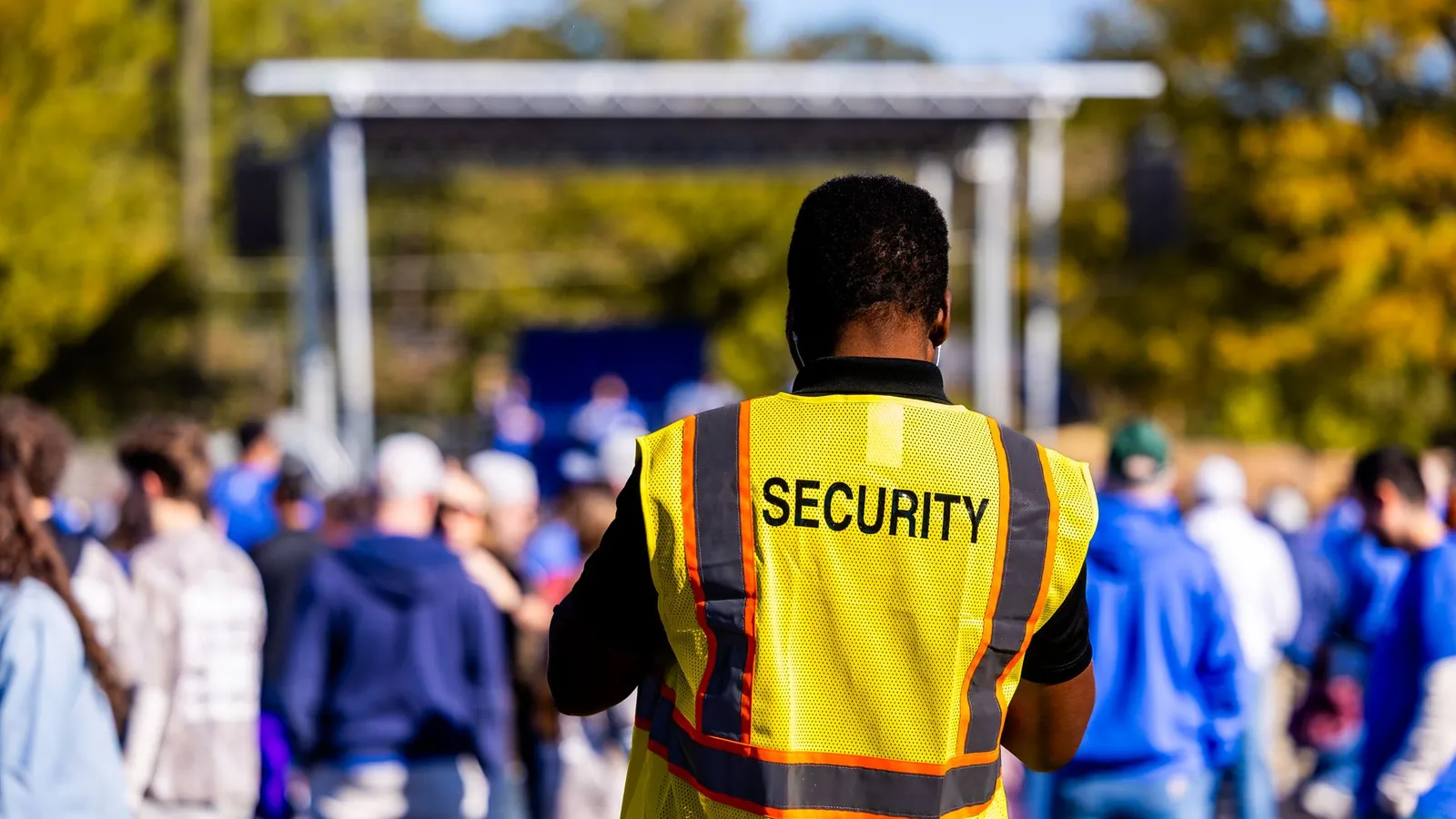
If you are organising an event in Birmingham or anywhere else in the UK, one question comes up early and often gets answered wrongly: do you actually need licensed door supervisors, or will stewards do?
Getting this wrong is expensive. It can invalidate your insurance, breach your premises licence, and in the worst case lead to prosecution. Here is how to work out where you stand.
The short answer
You need SIA-licensed door supervisors if your event involves any of the following:
- Alcohol is being sold or supplied under a premises licence
- Regulated entertainment is taking place and the licence requires door staff
- Anyone is carrying out "guarding against disorder" — controlling entry, removing people, or managing behaviour
You can usually use unlicensed stewards if their role is limited to directing people, checking tickets in a purely administrative way, and giving information. The moment a person's job includes deciding who comes in, refusing entry, or removing someone, they need a licence.
Where the line actually falls
The distinction the Security Industry Authority draws is between stewarding and security. It has nothing to do with what you call the role, and everything to do with what the person is actually doing on the night.
A steward showing people to their seats does not need a licence. The same person asking someone to leave because they are drunk does. If your stewards are likely to end up doing the second thing, licence them, because "we didn't intend them to do that" is not a defence after the event.
How many do you need?
There is no single national formula. Your licensing authority may specify a ratio as a condition of the premises licence, and if it does, that number is binding. Where it does not, the common starting point across the industry is:
- 1 door supervisor per 100 attendees for a standard event
- 1 per 75 where alcohol is central to the event or the crowd skews younger
- Additional cover for each entrance, exit and bar
That is a starting point, not a rule. A seated conference of 300 people needs fewer staff than a 300-capacity music night. A written risk assessment is what justifies your number, and it is the first thing anyone will ask for if something goes wrong.
What to check before you book anyone
Whoever you hire, verify these four things:
- Every individual holds a current SIA licence. It is worth knowing what that licence actually covers. You can check any licence free on the SIA's public register. Ask for the licence numbers, not a reassurance.
- The company carries public liability insurance, and the cover level meets what your venue requires.
- They will provide a written assignment brief covering entry policy, refusal procedure, incident reporting and evacuation roles.
- Incidents get recorded. If there is a dispute or a claim later, a contemporaneous written log is the difference between a defensible position and your word against theirs.
Common mistakes
Booking too late. Licensed event security staff are finite, and summer weekends in Birmingham go early. Two weeks out, you are choosing from what is left.
Counting only the front door. Fire exits, backstage areas, bars and car parks all need consideration. Attendees leave by whichever door is nearest.
Assuming the venue provides cover. Many venues supply door staff for their own trading hours only, not for a private hire. Confirm in writing what is included.
Treating the risk assessment as paperwork. It is the document that shows you made a reasoned decision. Without it, any staffing number looks arbitrary.
If you are still unsure
The safe position is to ask your licensing authority directly — they will tell you what your premises licence requires, and the conversation costs nothing.
If you are still weighing up providers, our 10 checks before hiring a security company is a useful next read.
If you would rather talk it through with someone who staffs these events every week, get in touch. We can look at your capacity, venue layout and licence conditions and tell you what cover actually makes sense, including when the honest answer is that you need fewer people than you thought.