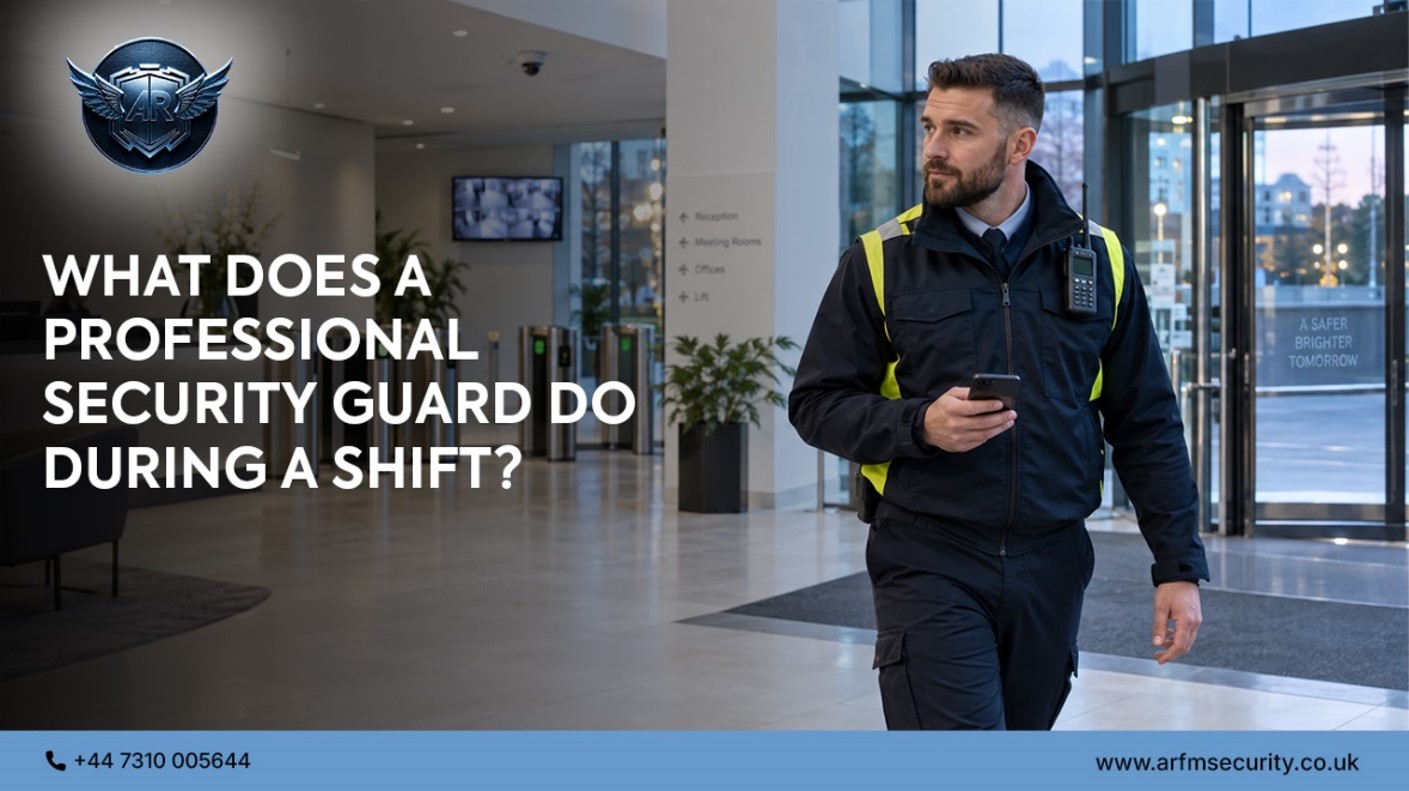
What Does a Professional Security Guard Do During a Shift?
Most people only notice a security guard when something goes wrong. In reality, the bulk of the job happens quietly, through routine checks, observation, and preparation that prevent incidents before they start. Understanding security guard duties UK wide helps businesses know exactly what they're paying for, and what good coverage should look like. This guide breaks down a typical shift from start to finish.
Before the Shift Starts: Briefing and Handover
A professional shift begins before the guard even reaches their post. Most reputable providers run a proper handover between outgoing and incoming staff, covering any incidents from the previous shift, ongoing concerns, and specific instructions for the site. This is one of the clearest markers of professional security guard duties, sloppy or rushed handovers are where information, and accountability, gets lost. At AR FM Security, every shift begins with a structured briefing so incoming guards arrive already up to speed on the site, not learning as they go.
1. Site Access Control
Controlling who enters and exits a site is one of the most fundamental security guard responsibilities. This includes checking identification, verifying visitor appointments, signing in contractors, and ensuring only authorised personnel access restricted areas. On a retail site this might mean monitoring entrances during busy periods, on an office site it often means managing a reception desk or barrier point.
2. Regular Patrols
Static presence alone isn't enough. Guards typically carry out scheduled patrols around the site, both internal and external, checking doors, windows, fire exits, and blind spots that CCTV might miss. Patrol routes are usually varied deliberately so patterns aren't predictable to anyone watching the site with bad intent. This is a core part of what security guards do on shift, and it's often where problems like attempted break ins or vandalism are caught early. AR FM guards log each patrol digitally as it happens, so clients can see exactly when and where checks were carried out, not just take it on trust.
3. Monitoring CCTV and Alarm Systems
On sites with surveillance equipment, guards are often responsible for monitoring live camera feeds, responding to alarm triggers, and reviewing footage when an incident occurs. This requires focus and the ability to distinguish genuine threats from false alarms quickly, particularly during quiet overnight shifts when vigilance can be harder to maintain.
4. Incident Response
When something does happen, whether it's an altercation, a medical emergency, a fire alarm, or a suspected intruder, the guard's training kicks in. This includes the escalating confrontations calmly, following site specific emergency procedures, contacting emergency services when needed, and securing the area until the situation is resolved. Trained SIA licensed security guards Birmingham wide follow structured response protocols rather than improvising, which keeps both staff and the public safer. Every AR FM guard is fully vetted and trained to these protocols before ever being deployed to a client site.
5. Digital and Written Reporting
Every notable event during a shift, however minor, should be logged. Modern providers use digital reporting systems that record patrol times, incidents, and observations in real time, giving clients a transparent, timestamped record they can review at any point. This is a significant part of security guard duties UK businesses increasingly expect, since it replaces the old paper logbook with something far harder to dispute or lose.
6. Customer Service and Visibility
A guard's presence isn't only about enforcement, it's also reassurance. Greeting visitors, answering basic queries, directing people around a site, and simply being visible and approachable all contribute to a safer, more welcoming environment. On retail and event sites in particular, this soft skill matters as much as physical capability.
7. Liaising With Emergency Services and Management
When an incident escalates beyond what on site staff can resolve, guards act as the first point of contact for police, fire, or ambulance services, providing them with accurate information and site access. They also keep site management or control rooms updated throughout the shift, particularly for anything unusual or ongoing.
8. End of Shift Checks and Handover
Just as the shift begins with a briefing, it should end with one. This includes a final walkthrough, securing the site (locking doors, setting alarms), completing shift reports, and briefing the next guard on anything they need to know. Consistent professional security guard duties at the end of a shift are what keep coverage seamless around the clock.
Why This Matters When Hiring
Understanding what a shift actually involves helps you ask better questions when hiring a provider. Do they run proper handovers? Do they use digital reporting or paper logs? How are patrols structured? A company that can answer these clearly, rather than giving vague reassurances, is usually the one delivering genuinely professional security guard duties UK wide, not just a body in a uniform. Looking for SIA licensed guards who follow structured, professional shift procedures? AR FM Security provides trained personnel across Birmingham, London, and the wider UK, with digital incident reporting and 24/7 operational support built into every contract. Get a free quote or call 07310005644 to discuss your requirements. Related services: Door Security Supervisor, Event Security, Retail Security, Office Security, Vacant Property Security